Breast Implant Size Calculator
Calculate your ideal breast implant size based on body measurements and aesthetic goals
Enter your measurements to see personalized recommendations
Concise Summary
A breast implant size calculator helps estimate the ideal implant size for your body, desired cup size, and proportions. Using factors like chest width, current breast volume, and desired augmentation, these calculators provide a visual and numerical guide. Popular tools include breast implant bra size calculators, cup size calculators, and visual simulators. Implant sizes are measured in cubic centimeters (cc) and range typically from 125cc to 800cc depending on goals and anatomy.
Implant Volume Reference Chart
| Implant Volume (cc) | Approximate Cup Size Increase |
|---|---|
| 150-200 cc | 0.5 – 1 cup size |
| 250-300 cc | 1 – 1.5 cup sizes |
| 300-350 cc | 1.5 – 2 cup sizes |
| 400-450 cc | 2 – 2.5 cup sizes |
| 500-600 cc | 2.5 – 3 cup sizes |
| 650-800 cc | 3+ cup sizes |
What is Breast Augmentation?
Breast augmentation is a cosmetic procedure that uses implants to:
- Increase breast volume (e.g., going from an A cup to a C cup)
- Restore breast volume lost after pregnancy or weight changes
- Improve breast symmetry and shape
The ultimate goal is aesthetic harmony, ensuring your breasts complement your body frame, chest width, and natural proportions.
Understanding Breast Implant Sizing
Why Implant Volume Matters
Implant size is measured in cubic centimeters (cc), which is far more accurate than bra cup sizing. Cup sizes vary between brands and countries, but cc provides a standardized measurement surgeons rely on.
- 150–200cc → ~1 cup increase
- 250–300cc → ~1.5 cup increase
- 350–400cc → ~2 cup increase
Important:
The same implant volume will look different on different body frames. For example, a 350cc implant on a petite 32-inch band may appear as a D cup, while on a 38-inch band, it may look like a C cup.
Breast Implant Size Comparison Chart
| Implant Volume (cc) | Profile | Approx. Cup Size Increase | Appearance / Notes |
|---|---|---|---|
| 100–150 cc | Mini | A → Small B | Subtle, natural increase |
| 150–250 cc | Demi | A → B | Moderate, natural look |
| 250–350 cc | Demi / Full | B → C | Noticeable fullness |
| 350–450 cc | Full | C → D | Fuller, more projection |
| 450–550 cc | Full / Corsé | D → DD | Large, very full |
| 550–700+ cc | Corsé | DD → E+ | Very large, dramatic projection |
Breast Implant Cup Size Chart
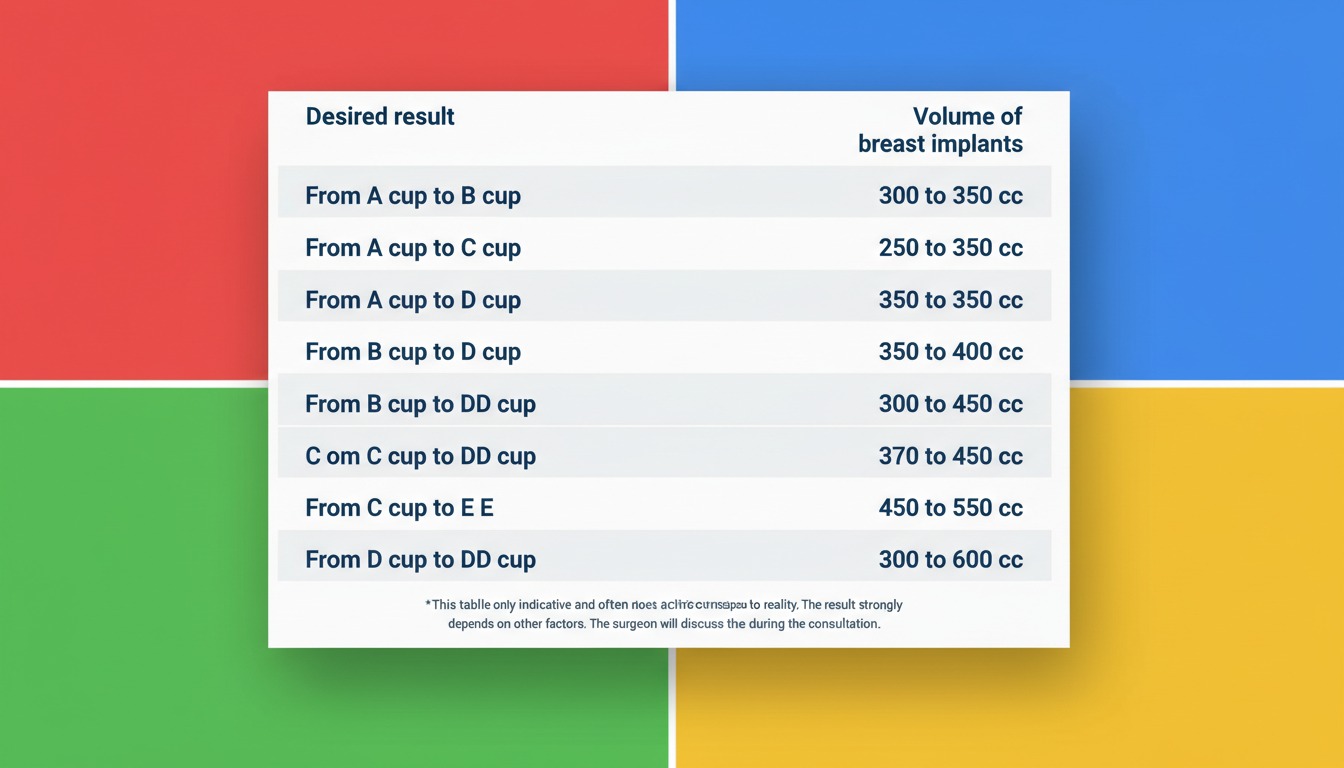
Volume to Cup Size Guide showing the relationship between desired results and implant volumes needed.
Breast Implant Size Calculator
A breast implant calculator simplifies your size selection by converting your desired cup size into cc volume. Most calculators consider:
- Current band and cup size
- Desired cup size
- Chest width and frame
- Existing breast tissue
Pro Tip:
Use a breast implant bra size calculator or breast implant cup size calculator for preliminary planning, but always consult a certified surgeon for final recommendations.
Breast Enlargement Size Chart
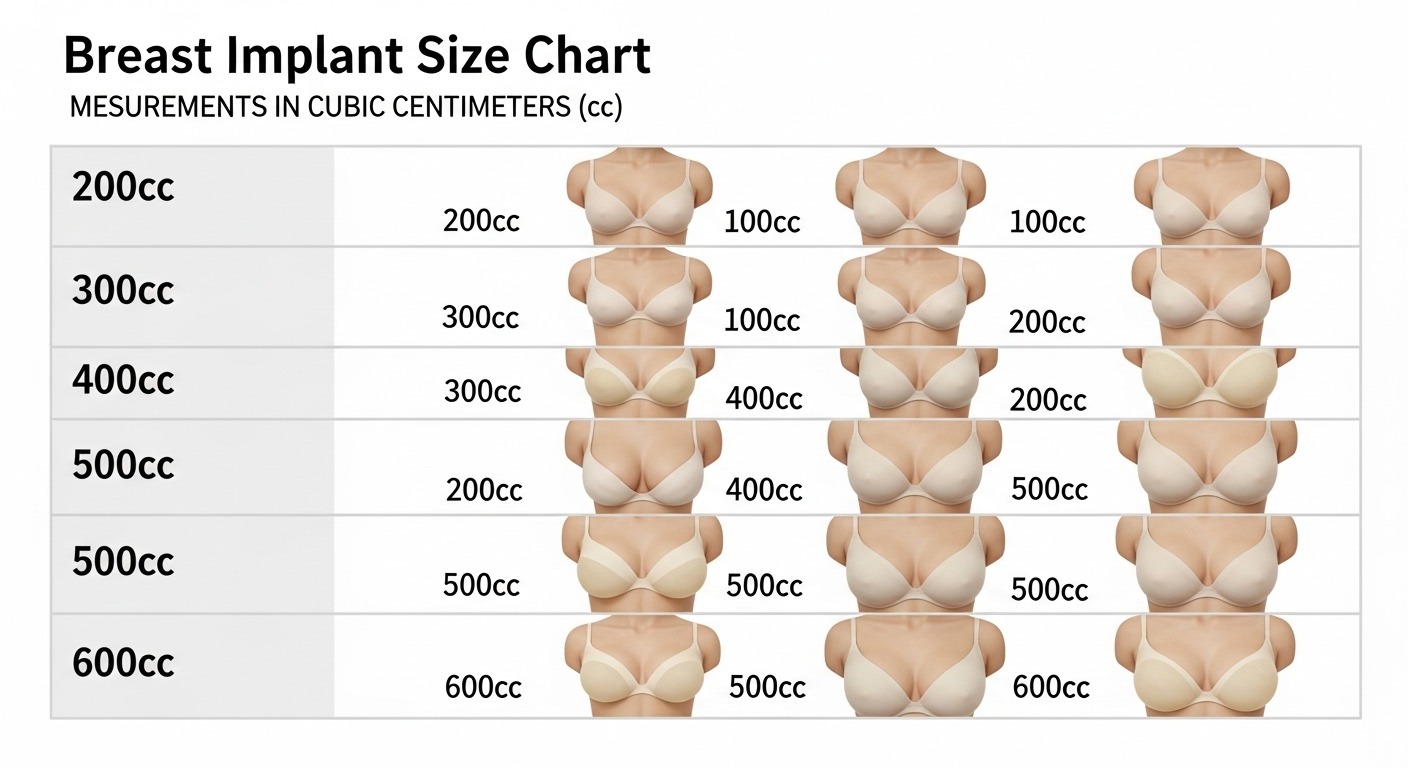
Visual comparison showing breast sizes from A cup through H cup on different body frames, demonstrating how the same cup size appears different based on individual anatomy.
Implant Volume, Diameter, and Profile
| Feature | What It Means | Surgical Impact |
|---|---|---|
| Volume (cc) | Total implant size | Determines cup increase |
| Diameter (mm/cm) | Implant width across the chest | Must match your breast base width |
| Projection/Profile | How far implant protrudes from chest | Low, Moderate, High profiles affect shape |
| Shape | Round vs Teardrop | Round gives upper fullness; teardrop mimics natural slope |
Example:
- 350cc, 12cm diameter, moderate profile → balanced, natural enhancement
- 350cc, 12cm diameter, high profile → more forward projection
Matching implant diameter to your chest base width is critical. Too wide → implants may extend to armpits; too narrow → unnatural look.
Breast Implant Types
| Implant Type | Fill Material | Weight | Pros | Cons |
|---|---|---|---|---|
| Silicone | Cohesive gel | 0.8 lbs / 350cc | Natural feel, less visible rippling | Slightly heavier, larger incision |
| Saline | Sterile salt water | 0.77 lbs / 350cc | Can adjust volume during surgery, smaller incision | Less natural feel, more prone to rippling |
Advanced options like Motiva implants offer new-generation silicone gels that mimic natural breast movement.
Silicone Implant Size Chart
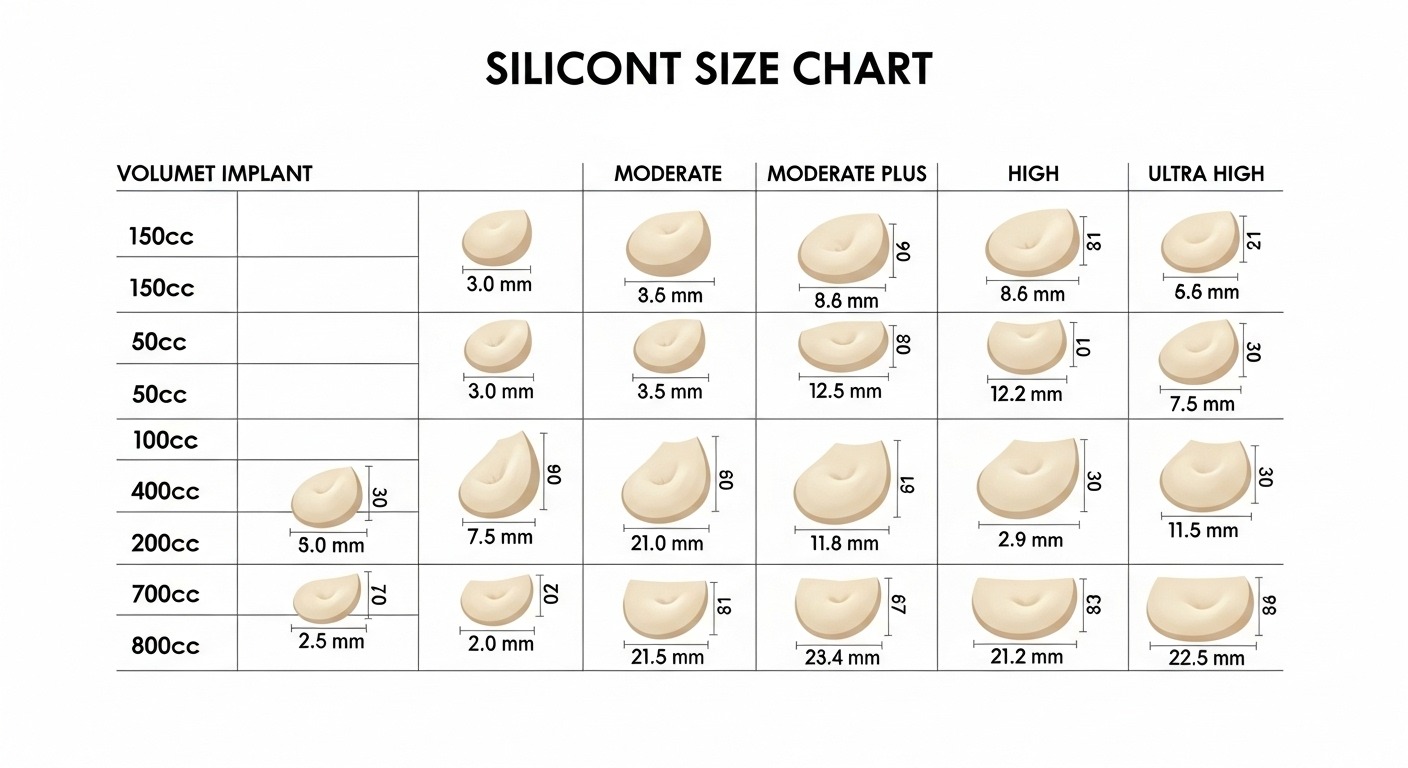
This chart shows silicone implant volumes across different profiles: Moderate (low projection), Moderate Plus (medium projection), High (increased projection), and Ultra High (maximum projection). Each profile affects the final appearance and projection from the chest wall.
Implant Placement Options
| Placement | Location | Benefits | Considerations |
|---|---|---|---|
| Subglandular | Above muscle, below breast tissue | Faster recovery, easier surgery | May show rippling if tissue is thin |
| Submuscular/Dual-plane | Partially under chest muscle | More natural slope, reduced rippling | Longer recovery, may affect muscle movement |
Choosing the Right Implant Size
Factors to Consider:
- Body Frame and Chest Width – Taller or wider-chested individuals can often support larger implants.
- Existing Breast Tissue – Less tissue may require smaller implants or submuscular placement.
- Skin Elasticity – Determines how well the skin stretches to accommodate volume.
- Lifestyle & Activity – Athletes or physically active people may prefer smaller or moderate-profile implants.
- Aesthetic Goals – Subtle vs dramatic enhancement. Bring photos of results you like.
Breast Implant Size Chart CC to Approximate Cup Increase
| Implant Volume (cc) | Approximate Cup Increase | Notes |
|---|---|---|
| 100–150 | ~0.5 cup | Very subtle enhancement |
| 150–200 | ~1 cup | Natural-looking increase |
| 250–300 | ~1.5 cups | Moderate enhancement |
| 350–400 | ~2 cups | Noticeable, full effect |
| 450–500 | ~2.5–3 cups | Dramatic change, only suitable for larger frames |
This chart is a guideline. Final results depend on chest width, tissue, and implant placement.
Breast Implant Size Visualizers & Simulators
Modern clinics use 3D simulation software to visualize implants:
- Compare sizes (e.g., 300cc vs 400cc)
- See different profiles (low, moderate, high)
- Preview results from multiple angles
This tool improves confidence and communication between patient and surgeon.
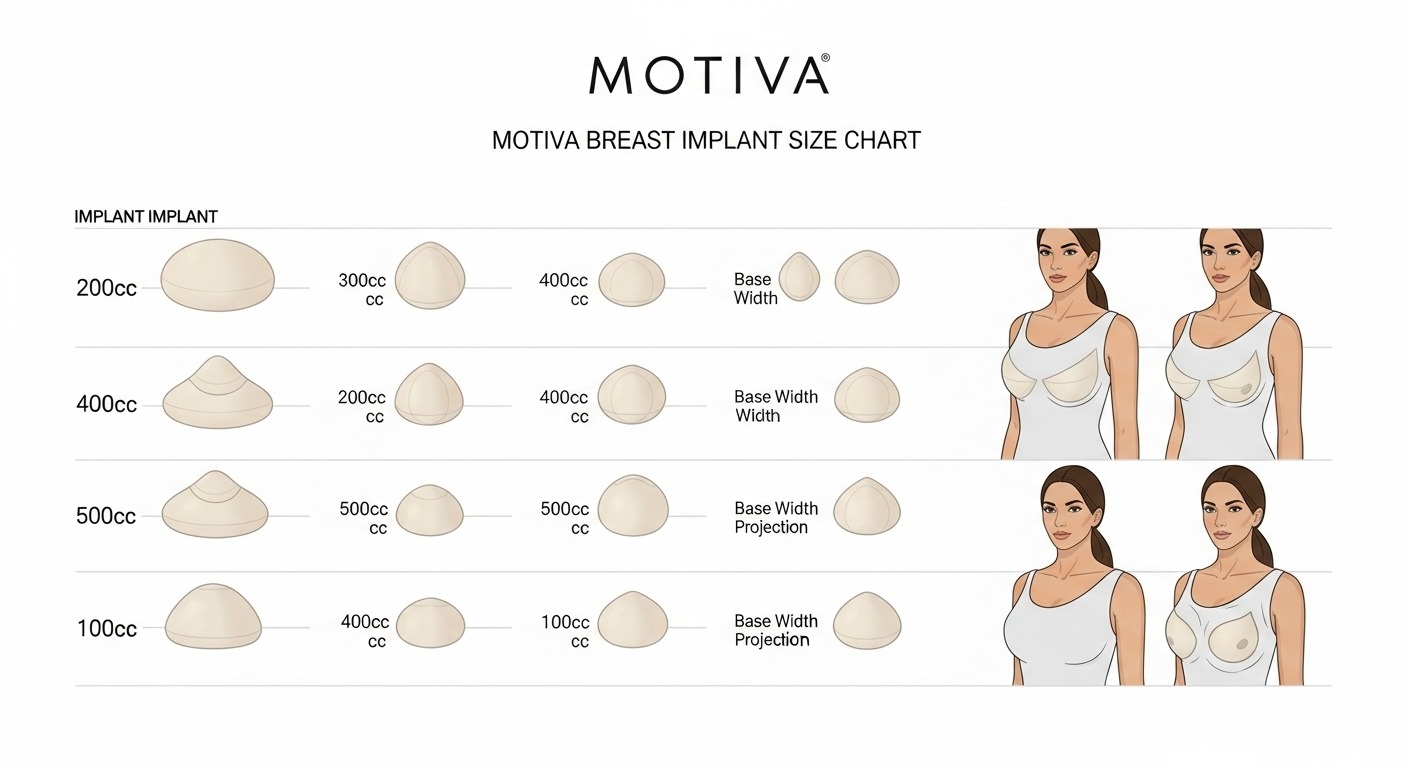
Breast Implant Size Chart Motiva
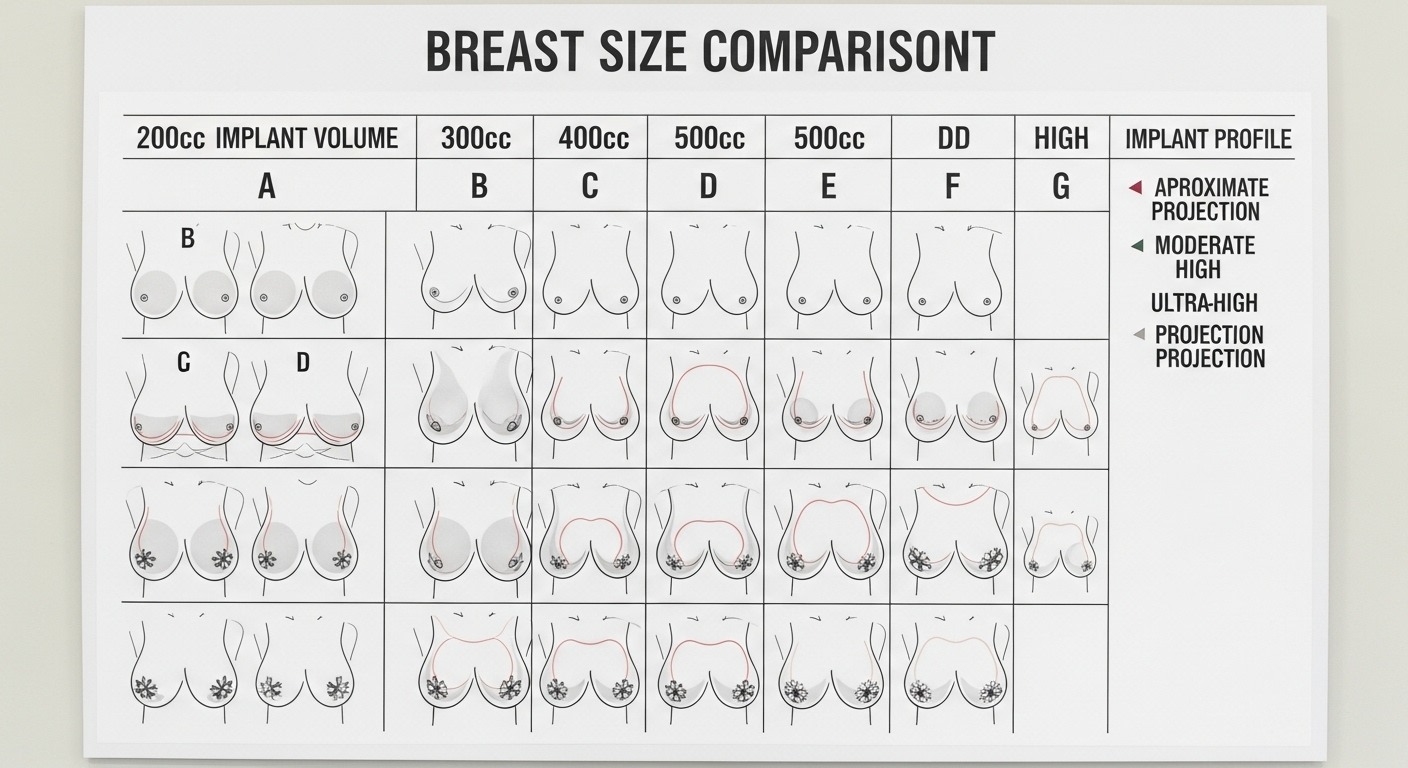
Motiva breast implants are measured in cubic centimeters (cc), which indicates the volume of the implant. However, the final appearance depends not only on cc but also on the implant profile (Mini, Demi, Full, Corsé) and base width, which must match your natural breast/chest size.
Points:
- Volume (cc): 100–700+ cc; measures silicone inside implant.
- Profiles:
- Mini → low projection, subtle
- Demi → moderate, natural
- Full → higher, fuller look
- Corsé → maximum projection, dramatic
- Base width: Should match your breast/chest width for natural fit.
- Appearance by cc (approx.):
- 100–250 cc → small increase (A→B)
- 250–350 cc → moderate increase (B→C)
- 350–450 cc → noticeable (C→D)
- 450–550 cc → large (D→DD)
- 550–700+ cc → very large (DD→E+)
- Important: Same cc looks different on different people due to chest width, tissue thickness, and implant profile.
- Tip: Surgeons use sizers to try different sizes/profiles before surgery.
Breast Implant Post-Operative Care
- Wear surgical bras 24/7 for first weeks
- Avoid lifting heavy objects or intense exercise
- Expect "drop and fluff" process: 3–6 months for implants to settle
- Professional bra fitting after healing is essential
- Monitor implant health over years; consider potential replacement
Common Questions About Implant Sizing
Q1: What is the most common breast implant size?
Typically 300–400cc for an average frame (1.5–2 cup increase)
Q2: Can I breastfeed after implants?
Yes, especially with inframammary (under-breast) incisions
Q3: How long does it take for implants to settle?
3–6 months for final position and softness
Q4: How do I choose between small and large implants?
Balance aesthetic goals, lifestyle, and body frame. Smaller implants → natural look, larger → more dramatic.
Expert Insights
- Dr. Anca Breahna (UK) – Emphasizes natural, proportional results tailored to anatomy
- Dr. Craig Rubinstein (Melbourne) – Advocate of 3D imaging and implant width matching
- Dr. Juan Carlos – Breast reconstruction specialist highlighting natural slope and contour
Modern aesthetic surgery combines technical expertise, visualization, and patient-first planning.
Rate this Tool
How useful was this calculator for you?